
In 1970, an unknown economist named George Akerlof published a paper about used cars that was rejected twice and dismissed as "trivial" by reviewers at the American Economic Review. Thirty-one years later, he shared the Nobel Prize in Economic Sciences. The paper is the foundation of why marketplaces with unknown sellers behave the way they do - and why curation, not better products, fixes them.
Akerlof's Insight: The Death Spiral
Akerlof's 1970 paper, The Market for Lemons, formalised a simple mechanism. When buyers cannot directly observe quality before purchase, they form expectations based on the average quality available in the market. They then discount their willingness to pay to match that average.
Here is where it spirals. Sellers of high-quality goods find the discount unsustainable and leave the market. With them gone, the average quality drops further. Buyers discount more. More good sellers leave. The market either ends up holding only the lowest-quality goods - the "lemons" - or it collapses entirely. Akerlof's takeaway was clear: information asymmetry, not the goods themselves, is what kills the market.
He also named the canonical solutions: inspections, warranties, and certifications. The fact that buyers and sellers willingly pay for these mechanisms is itself proof that the problem is real.
The E-Commerce Translation
In 2001 and 2002, D. Harrison McKnight and Norman Chervany formalised the same framework for online markets. They identified three layers of trust a buyer brings to a transaction:
- Disposition to trust - a person's general willingness to depend on others.
- Institution-based trust - the buyer's belief that third-party institutional mechanisms are in place to make the transaction safe.
- Trusting beliefs - specific beliefs about the individual vendor's competence and integrity.
The critical claim is that trust is transferable. A buyer who trusts a marketplace platform transfers part of that trust to the unknown sellers operating on it. Without that institutional layer, the buyer has no basis for trusting any individual seller they have never previously transacted with.
Empirical Proof: Amazon Auctions
In 2004, Paul Pavlou and David Gefen published Building Effective Online Marketplaces with Institution-Based Trust in Information Systems Research. They surveyed 274 buyers on Amazon's online auction marketplace and showed that three institutional mechanisms - feedback systems, third-party escrow, and credit-card guarantees - directly produced trust in the community of unknown sellers. Longitudinal follow-up data confirmed that trust predicted actual purchase behaviour, not just stated intent.
The framework has held up across three decades of replications: social commerce, B2B e-commerce, sharing-economy platforms, IoT services, and a 2025 cross-country study on digital currency adoption. It is one of the most stable findings in information systems research.
The 2025 B2B Buyer Data
The contemporary buyer environment shows the same theory operating at full force. The Software Finder 2025 SaaS Security Report (analysis of thousands of buyer-vendor interactions, Q4 2024 through Q2 2025):
- 52% of buyers choose vendors based on certifications and data-privacy posture.
- 57% have replaced a SaaS vendor over unresolved security issues.
- 61% of enterprises and 26% of SMBs require InfoSec sign-off before purchase.
- Over half of B2B buyers raise security in the very first conversation, up from 28% in 2023.
- Vendors with a public trust center close 32% faster.
The G2 2025 Buyer Behavior Report (n=1,169 B2B decision-makers, April 2025) added a sharper data point: 75% of buyers impose stricter requirements specifically when the software is AI-powered. The 6sense 2025 study of roughly 4,000 buyers confirmed that generative AI has not collapsed verification needs - median B2B purchase value sits at $200,000 to $300,000, and buyers still take a stable 16 interactions per vendor.
What This Means For Indie Software
Indie and AI-built software is the cleanest current example of Akerlof's mechanism. Buyers cannot tell, pre-purchase, whether the code is well-built or insecure, whether the founder will still be around in six months, or whether support exists when something breaks. They therefore discount everything in the unknown-seller category - and quality builders, for whom that discount is unsustainable, either leave or never enter.
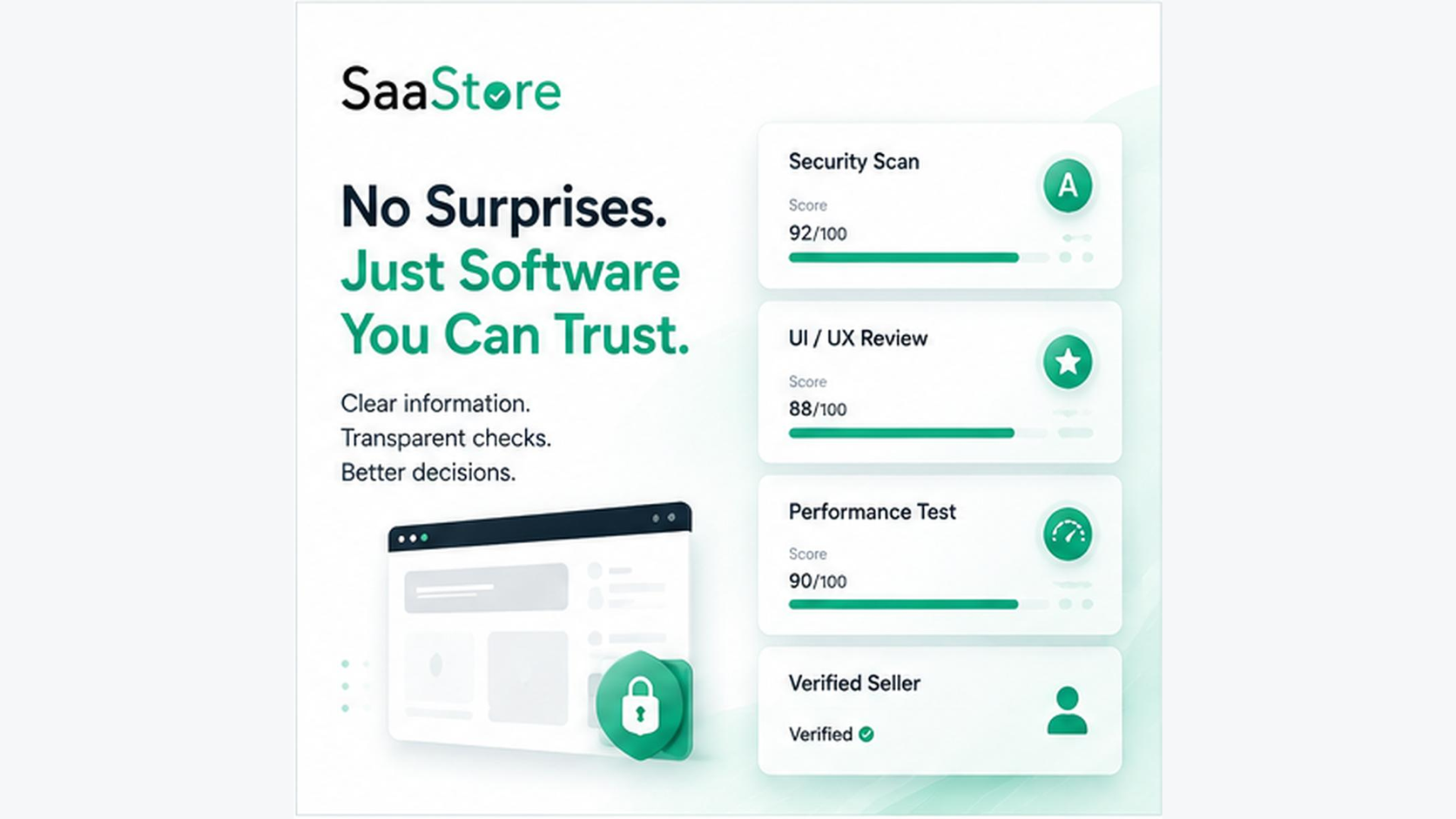
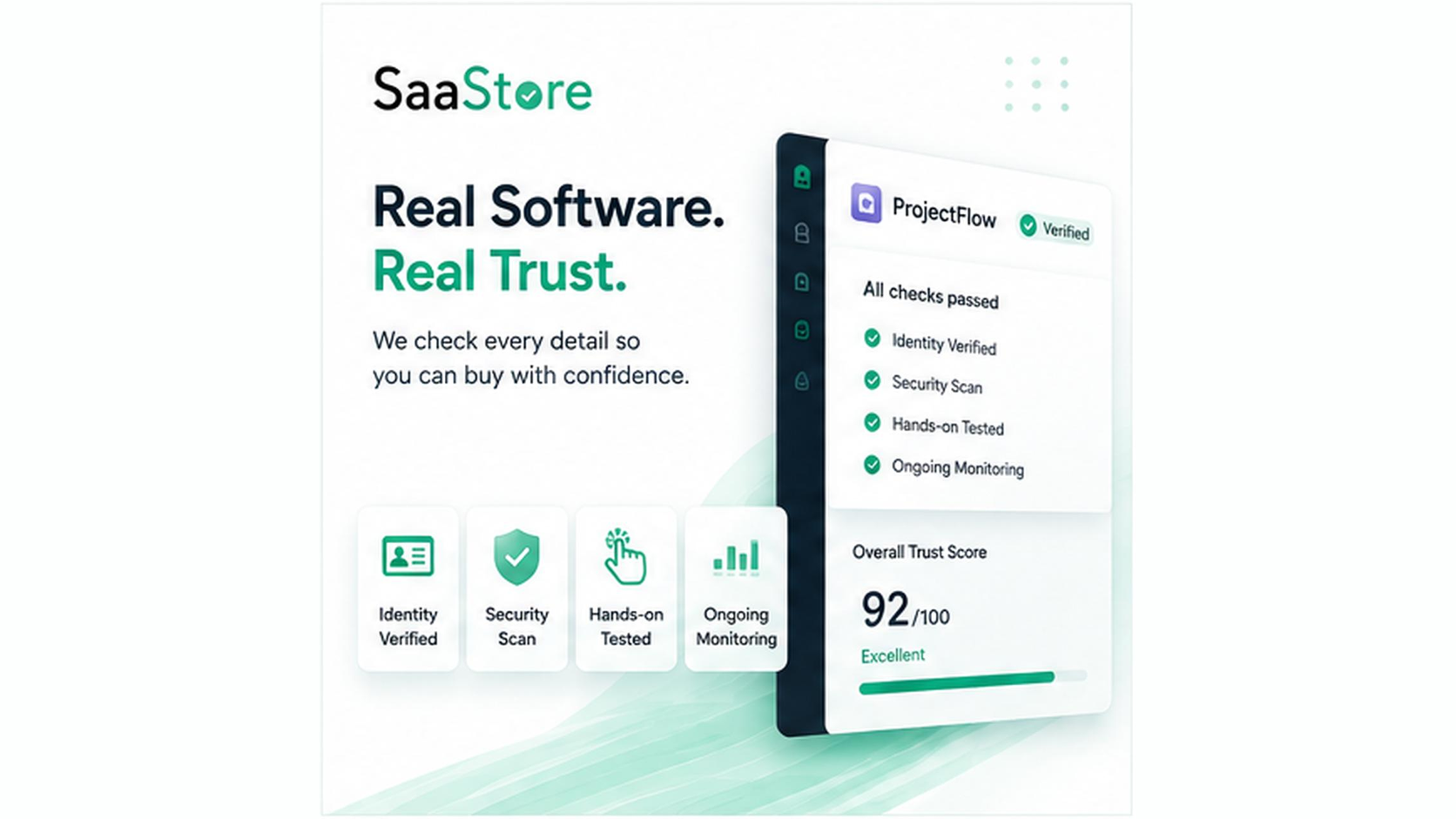
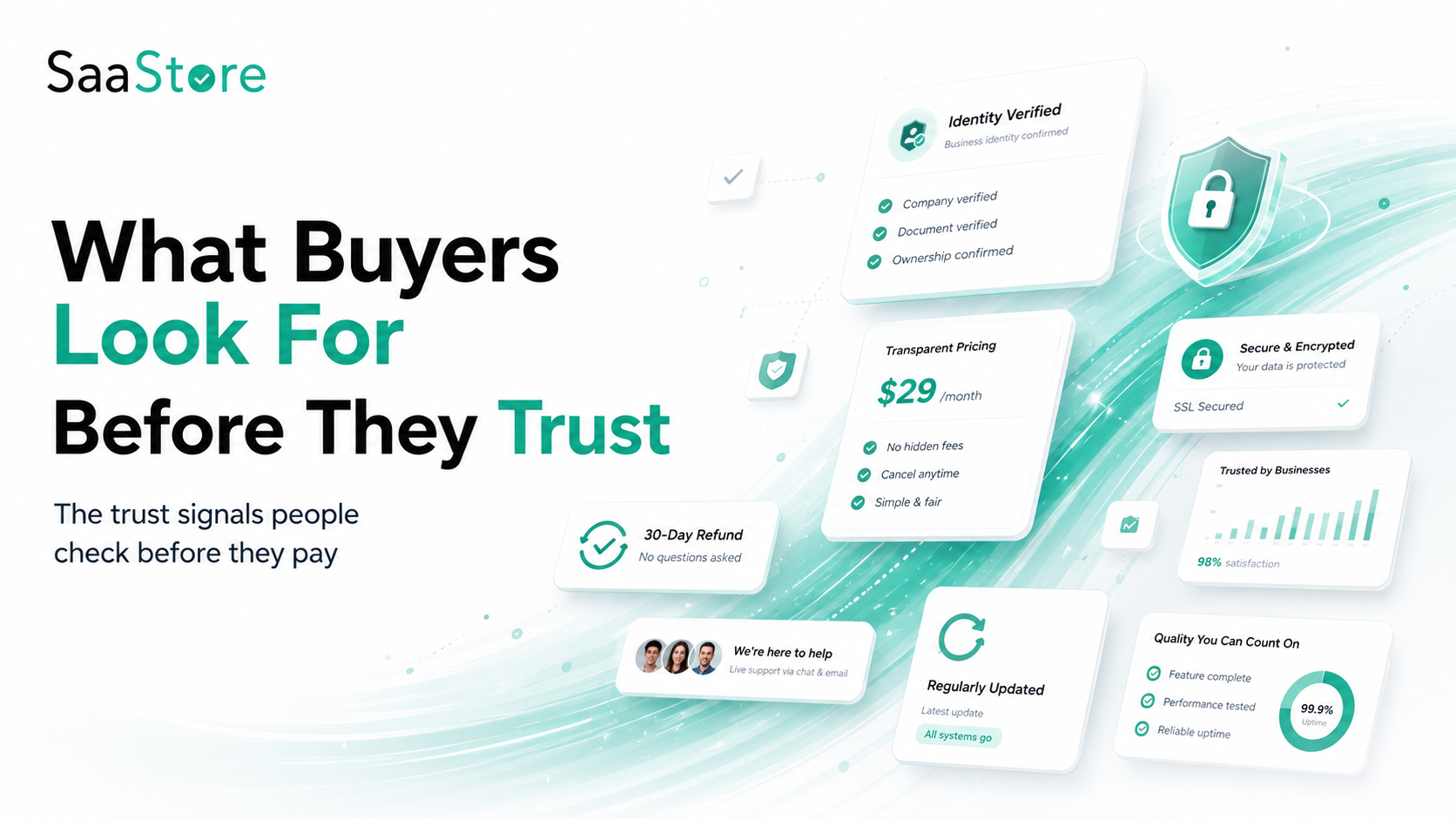
The fix is the same as it has been for fifty-five years: an institutional layer that substitutes for the missing direct trust. Curation. Verification. A signal that someone external did the homework. That is not a marketing claim. It is the conclusion of three decades of empirical research.
Better products do not solve the lemons problem. Better institutions do.