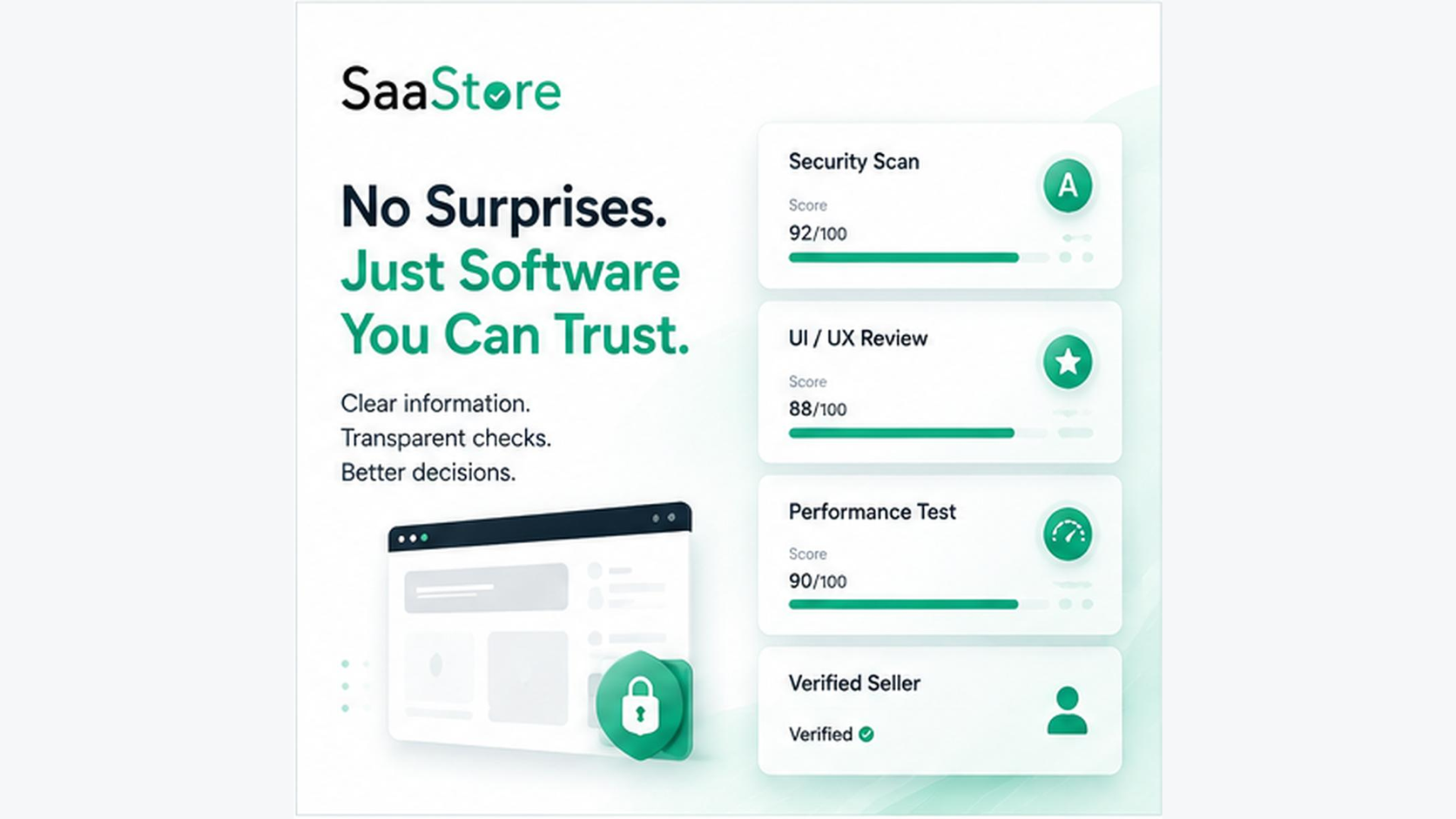
Short answer: buying software from an independent developer is safe when three things are true. The person behind it is a verified, reachable human. The site has been checked for common security gaps. And you pay by card through a mainstream processor, so you can dispute the charge if something goes wrong.
The problem is that most places selling indie software today were built to help you acquire a business or grab a lifetime deal, not to tell you whether a tool is safe to use. This guide covers what "safe" actually means and how to confirm it in about five minutes.
Why "safely" is the hard part now
Building software is no longer the bottleneck. With AI-assisted development, one person can ship a production-grade web app in days, and the number of small tools reaching the market has grown faster than any buyer can vet by hand. That is good news for choice and bad news for trust: when anyone can publish, "who made this and can I trust it?" becomes the real question.
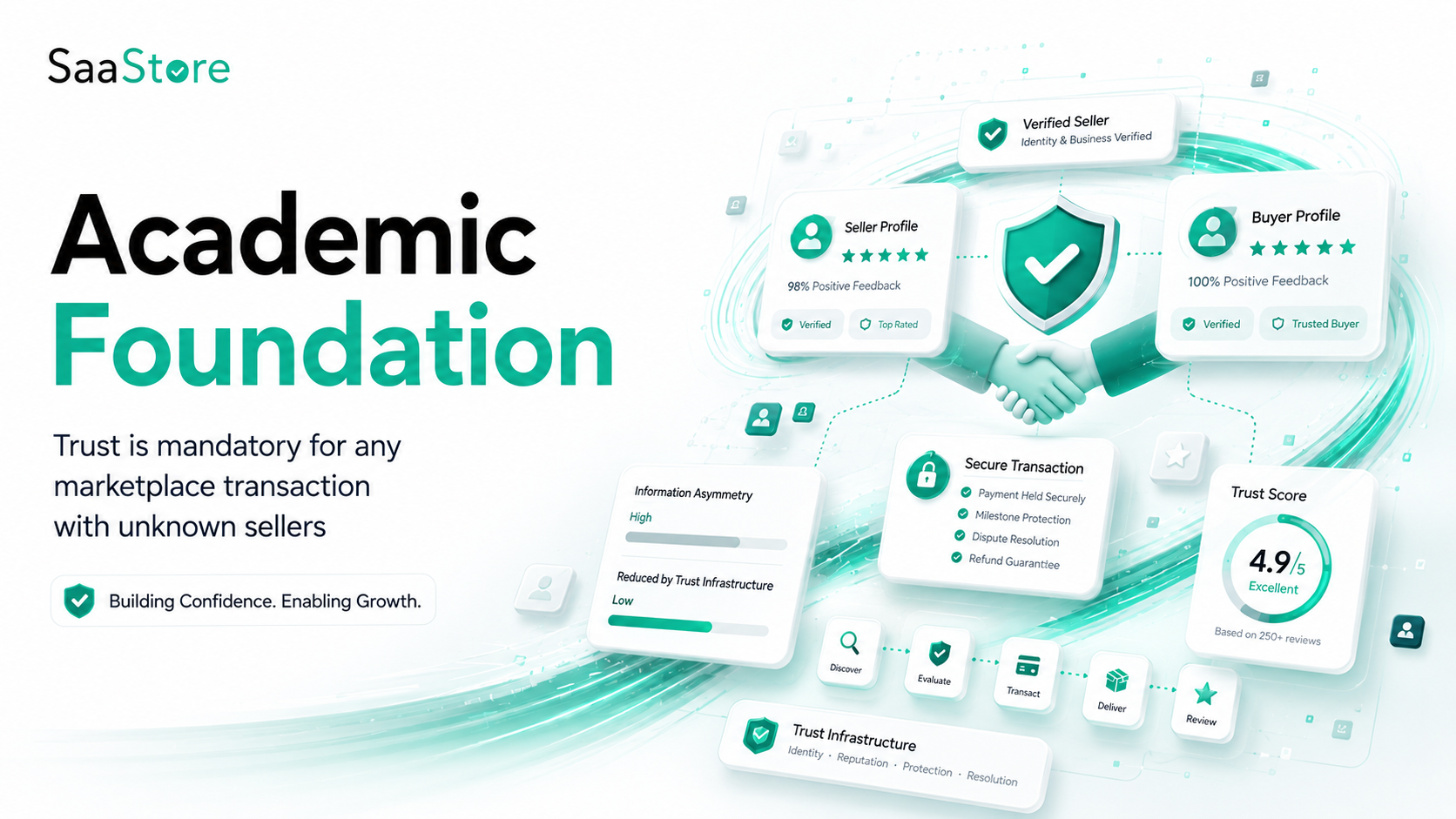
The classic "market for lemons" problem applies directly. When buyers can't tell good sellers from bad ones, they assume the worst, good sellers get punished, and the whole market gets harder to trust. That is exactly what an unknown seller, a blank avatar and one unexplained charge feel like.
So "safely" is not about avoiding indie software. Independent makers are often more responsive and closer to their customers than big vendors. It is about buying it from a place, or in a way, that does the verification you can't easily do yourself.
What makes an indie purchase safe
Safety comes down to five checks. A good buying channel does some of these for you; the rest you can do in a couple of minutes.
1. A verified, reachable seller. Is there a real, identifiable person or company behind the product, not just a logo? Can you reach them? A phone-verified or identity-verified seller is far less likely to disappear after you pay.
2. An independent security scan of the live site. Someone other than the seller should have looked at the site for common gaps: valid TLS/SSL certificates, DNS hygiene, security headers, exposed secrets or tokens, and known-vulnerability fingerprints. A scan is a signal that the seller welcomed outside review. It is not a guarantee, and you should read it as "an outside scanner checked for common issues," nothing more.
3. A functionality check. Has anyone actually run the product to confirm it does what the listing claims? A screenshot proves nothing; a hands-on check proves the basics work.
4. Clear, findable refund terms. A fair, plainly stated refund policy is one of the strongest trust signals there is. It does not make a product look weak. It tells you the seller expects to stand behind it. If refund terms are missing or vague, treat that as a warning.
5. A payment you can dispute. Pay by card through a mainstream processor, whether the checkout sits on the seller's own site or on a marketplace page, so the charge is reversible if something goes wrong. The red flag is not where you pay but how: be cautious of any "pay me directly" arrangement, by bank transfer, crypto or a personal payment app, that bypasses a real payment processor and leaves you no way to dispute.
Where the current options fall short
If you search for where to buy indie software safely today, you mostly get channels built for a different job.
- Game stores (itch.io, Steam, Game Jolt) are excellent, for games. They don't cover business SaaS, web apps, or browser extensions.
- Lifetime-deal sites (AppSumo and its many alternatives) optimise for discounts, not verification. Even their own roundups tell you to vet each tool yourself before buying.
- Acquisition and flip marketplaces (Acquire.com, Flippa, Empire Flippers) verify revenue and financials so you can buy the whole business. That is due diligence for an owner, not a trust check for a user who just wants to use the tool.
None of these is wrong. They just answer a different question than "is this tool safe for me to use?" That question, curated and hand-reviewed software you buy to use, is the gap.
Vet a listing yourself in five minutes
- Find the human. Look for a named founder, an About page, and a working contact. Search the name. A real footprint is reassuring; a total blank is not.
- Check the basics on the site. Is it served over HTTPS with a valid certificate? Are there real terms, a privacy policy, and a refund policy you can actually find?
- Read the refund and payment terms before you buy. Know how you'd get your money back and who you're paying.
- Look for outside signals, and read them honestly. Reviews, a security scan, a directory listing or a third-party mention all help, but only if they're specific.
- Try before you commit. A free trial or a small first purchase beats any badge. Verification lowers your risk; it never removes the value of using the thing yourself first.
Where SaaStore fits
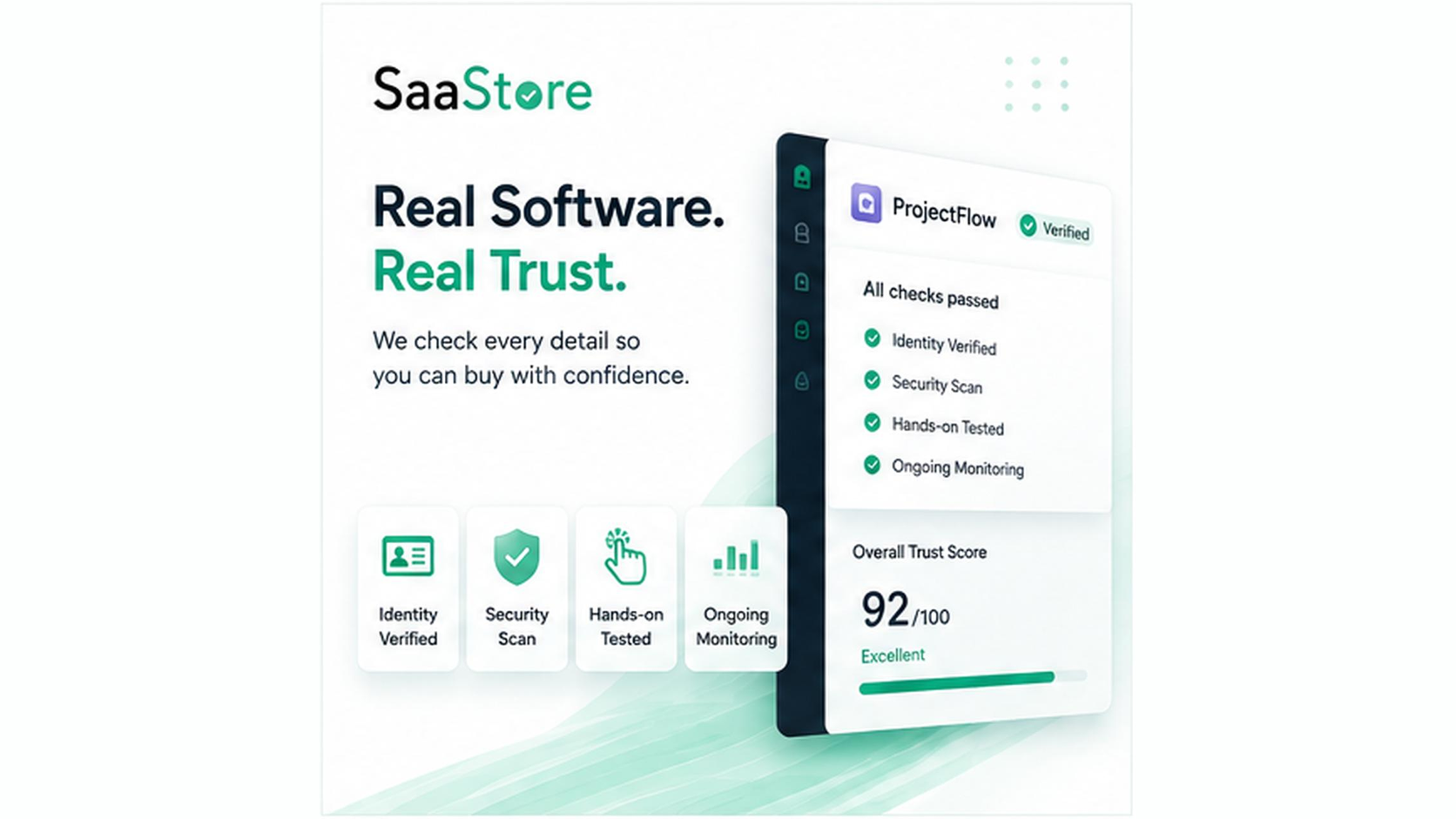
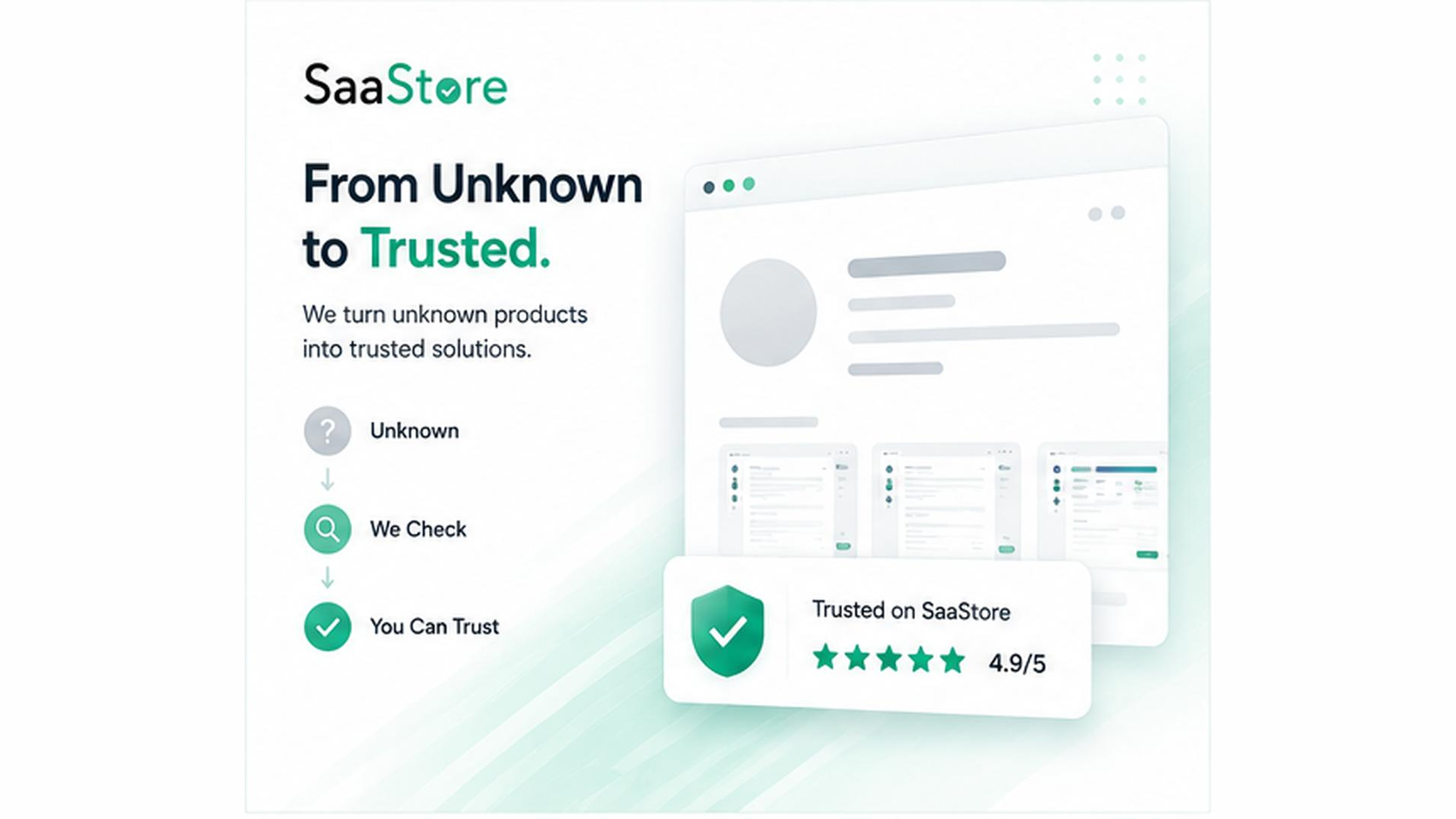
We built SaaStore for exactly this gap: a curated home for software from independent makers, where every listing is reviewed before it goes live. Approved apps can earn up to five trust signals on their page: an independent security scan, a UI/UX audit, a buyer persona-fit audit, a phone-verified seller, and our hands-on manual review. Each signal means we did some of the homework for you. We still tell every buyer the same thing: try the product before you commit.
You can subscribe and pay right on an app's SaaStore page, and some makers send you to their own site to check out instead. Either way the charge runs through a mainstream processor and stays disputable. We take no commission on what you buy. The maker keeps their sale, and nothing on this site is steering you toward a pricier tool to earn us more. We do sell optional promotion packages to makers, and anything promoted is labelled as promoted.
That is the honest version of "buy indie software safely": not a promise that nothing can go wrong, but a place that does the checks you'd otherwise have to do alone, and is upfront about what those checks do and don't cover.
Frequently asked questions
Is it safe to buy software from a developer I've never heard of? It can be, if you verify three things: that there's a real, reachable seller behind it, that the site has been checked for common security issues, and that you're paying by card through a mainstream processor so the charge stays disputable. An unknown name is a reason to check, not an automatic no.
What's the safest way to pay an indie developer? By card through a mainstream processor, so the charge is disputable if something goes wrong. That can be a checkout on the maker's own site or on a marketplace page that handles the payment. Either is fine. What to avoid is an off-platform "pay me directly" arrangement that skips a real payment processor.
Do security badges or scans guarantee a product is safe? No. A scan means an outside party checked the seller's live site for common gaps and the seller welcomed that review. It lowers your risk and signals good faith, but it is not a guarantee. Always try the product yourself before committing.
How is this different from AppSumo or an acquisition marketplace? Deal sites optimise for discounts and acquisition marketplaces verify financials so you can buy the business. Neither is built to tell a user whether a tool is trustworthy to use. A curated, hand-reviewed marketplace answers that specific question.