Short answer: a small SaaS is trustworthy enough to buy when you can confirm five things. There's a real, reachable person behind it. An outside party has checked the site for common security gaps. The refund terms are clear and easy to find. The reviews are specific rather than generic. And you pay by card through a mainstream processor, so the charge stays disputable.
You rarely need all five to be perfect. You do need to check them, because with small software the seller is the product, and an unknown seller is the single biggest source of buyer hesitation.
Why trust is the real question
When you buy from a large vendor, the brand does the reassuring for you. With a small or independent SaaS there is no brand to hide behind, which is both the risk and, often, the advantage. Small makers can be more honest, more responsive, and closer to their customers than any enterprise support desk. But you only get that upside if the seller is real and reachable in the first place.
The hesitation is rational. An unverified seller, a blank avatar, and one unexplained bad review are enough to lose a sale, and they should be, because you can't dispute a problem with someone you can't find. So the job before buying is not to feel reassured. It is to check the things that predict whether this seller will still be there, and still stand behind the product, next month.
The five signals that predict trust
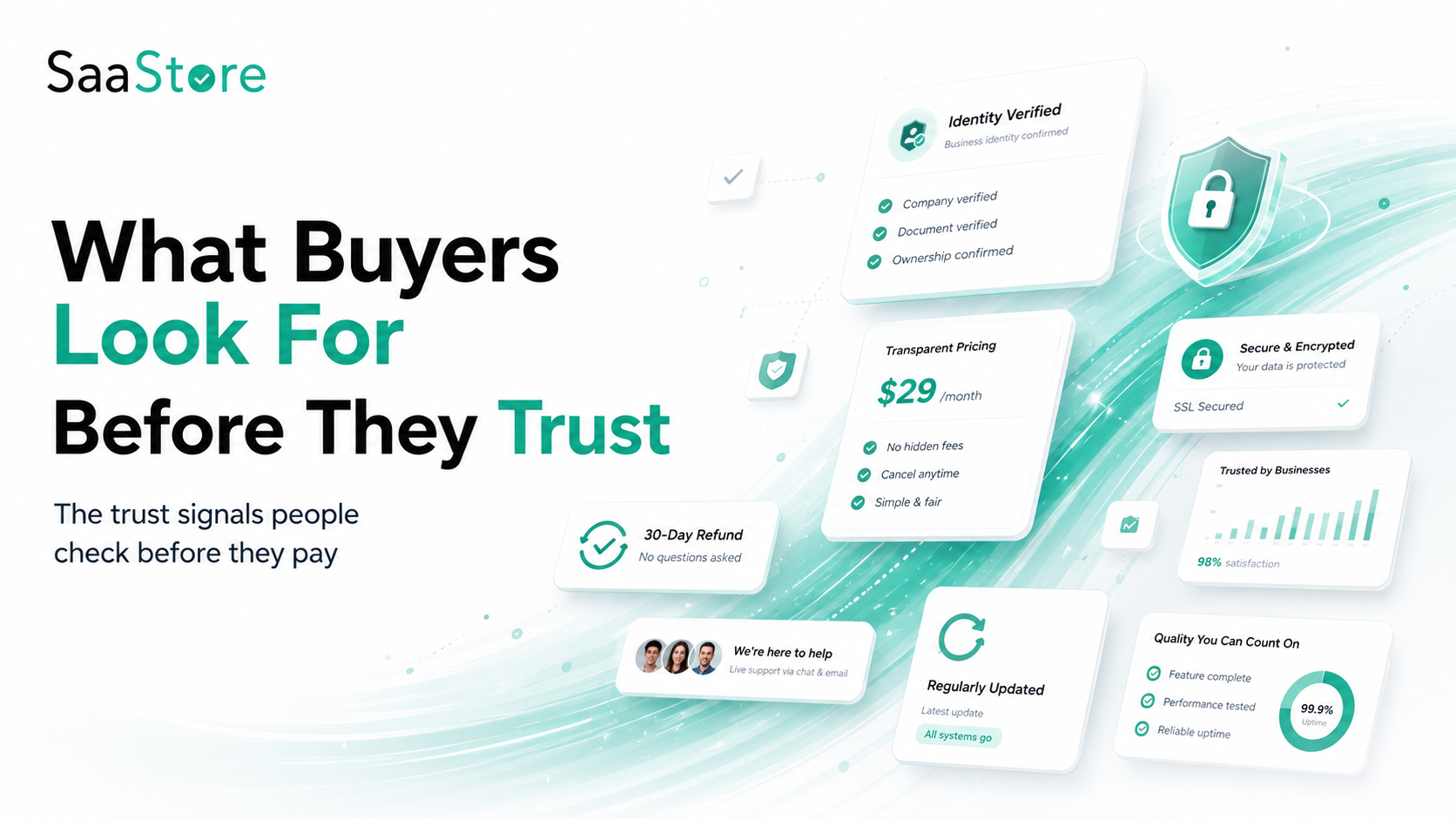
1. A real, reachable seller. Look for a named founder or company, an About page, and a working way to reach them. Search the name. A verified or phone-verified seller is far less likely to vanish after you pay. A total blank, with no name, no contact and no footprint, is the strongest red flag there is.
2. An outside security review of the live site. The seller checking their own security proves little. An independent scan of certificates, security headers, DNS hygiene, exposed secrets and known-vulnerability fingerprints means someone other than the seller looked, and the seller welcomed it. Read it as "an outside scanner checked for common issues," not as a guarantee of safety.
3. Clear, findable refund and cancellation terms. A fair refund policy is one of the most underrated trust signals. It does not make a product look weak. It signals that the seller expects to stand behind it and has thought about what happens if you're unhappy. If you can't find refund or cancellation terms, or they're deliberately vague, treat that as information.
4. Specific reviews, not generic praise. The only review worth much is one you can verify. Look for detail: screenshots, real numbers, a described use case. A wall of one-line "amazing tool!" testimonials is weaker than a single review that says exactly what the product did and for whom. Be sceptical of pages that feel engineered to reassure.
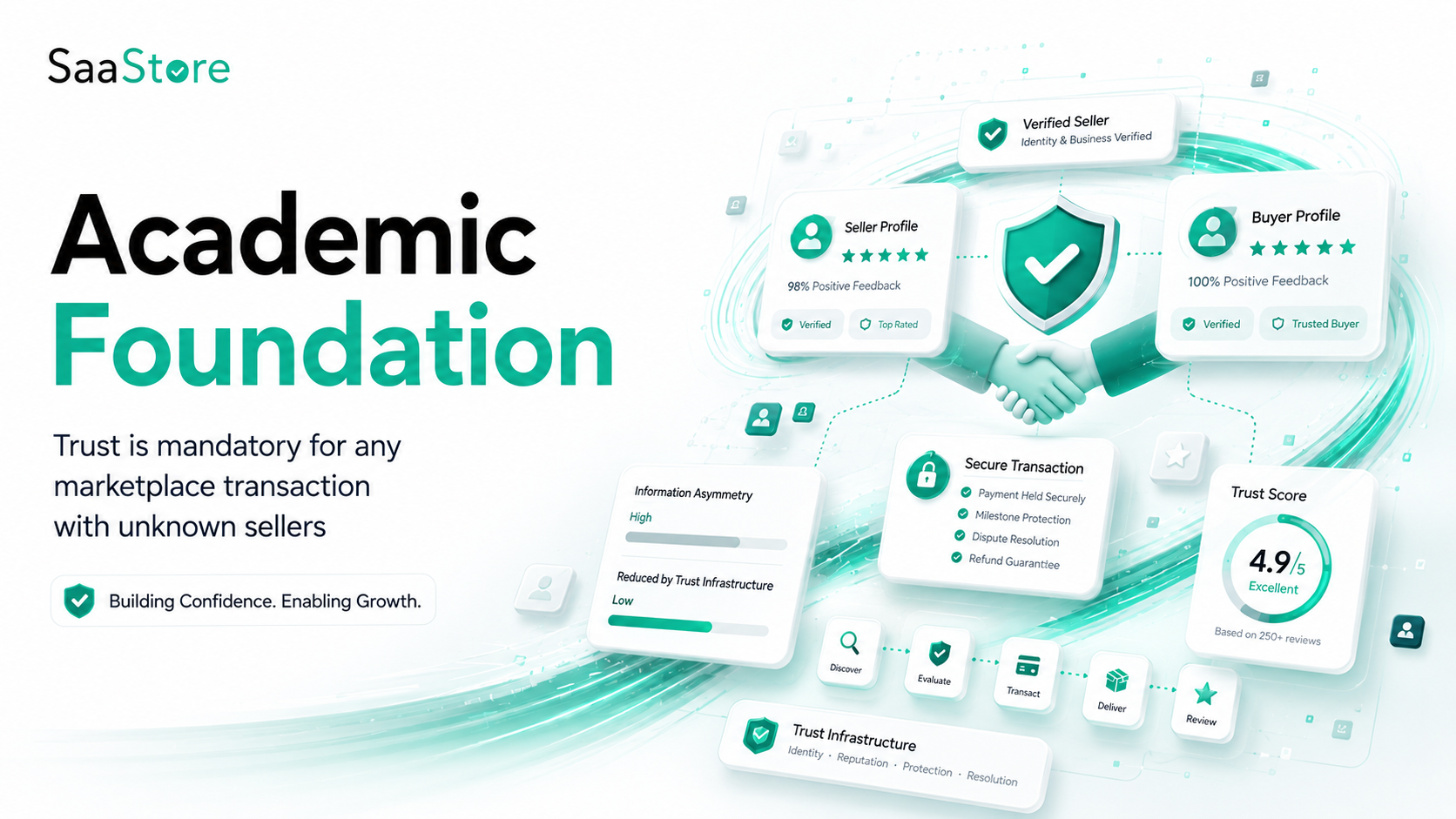
5. A payment you can dispute. Pay by card through a mainstream processor, whether that is on the seller's own site or on a marketplace page that handles the payment. What matters is not where you pay but how. A real processor in the loop turns "I hope this works out" into "I have recourse if it doesn't."
Red flags worth walking away over
- No identifiable human. If you can't find who's behind it or how to reach them, stop.
- Refund terms that are missing, buried, or contradictory. How a seller handles "I want my money back" tells you how they'll handle everything else.
- Reviews that are all perfect and all generic. If you have to keep asking whether you can trust a company, you probably already have your answer.
- Off-platform payment. Any request to pay outside a real processor removes your ability to dispute the charge.
The one-question test
If you only have thirty seconds, ask: what does this seller clearly say they do NOT do? Trustworthy makers are specific about their limits. What the tool doesn't cover, what data they don't touch, when a refund does and doesn't apply. Sellers who over-promise and stay vague on the boundaries are the ones to be careful with. Confidence about limitations is a better trust signal than confidence about features.
Where curated marketplaces fit
You can run all five checks yourself, and for a single purchase it's worth it. The alternative is buying somewhere that has already done the verification part. A curated marketplace reviews listings before they go live, so the "is there a real seller, has the site been checked, does the page make honest claims" work is done before you arrive, leaving you the part no one can do for you: trying the product and deciding if it fits.
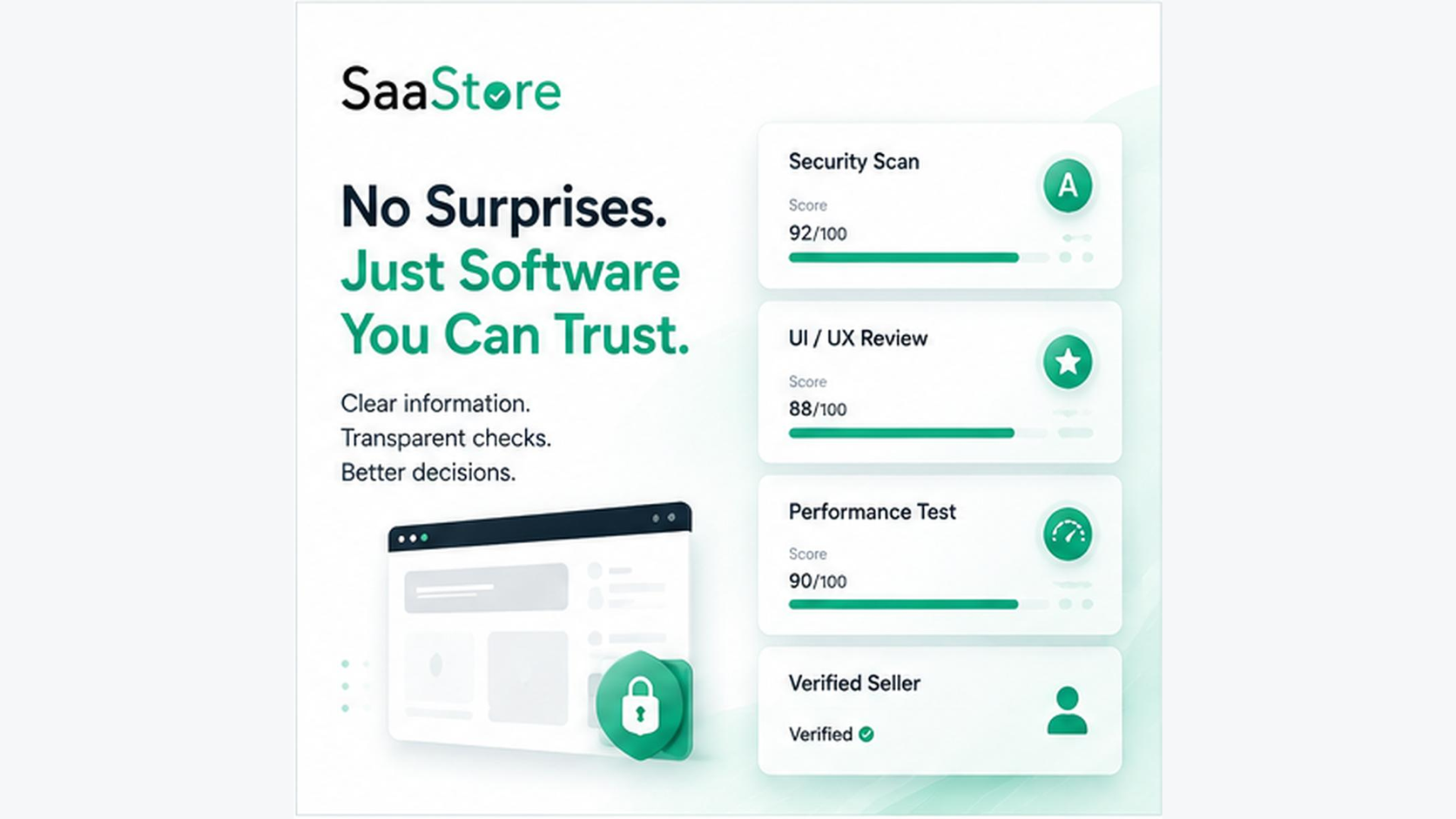
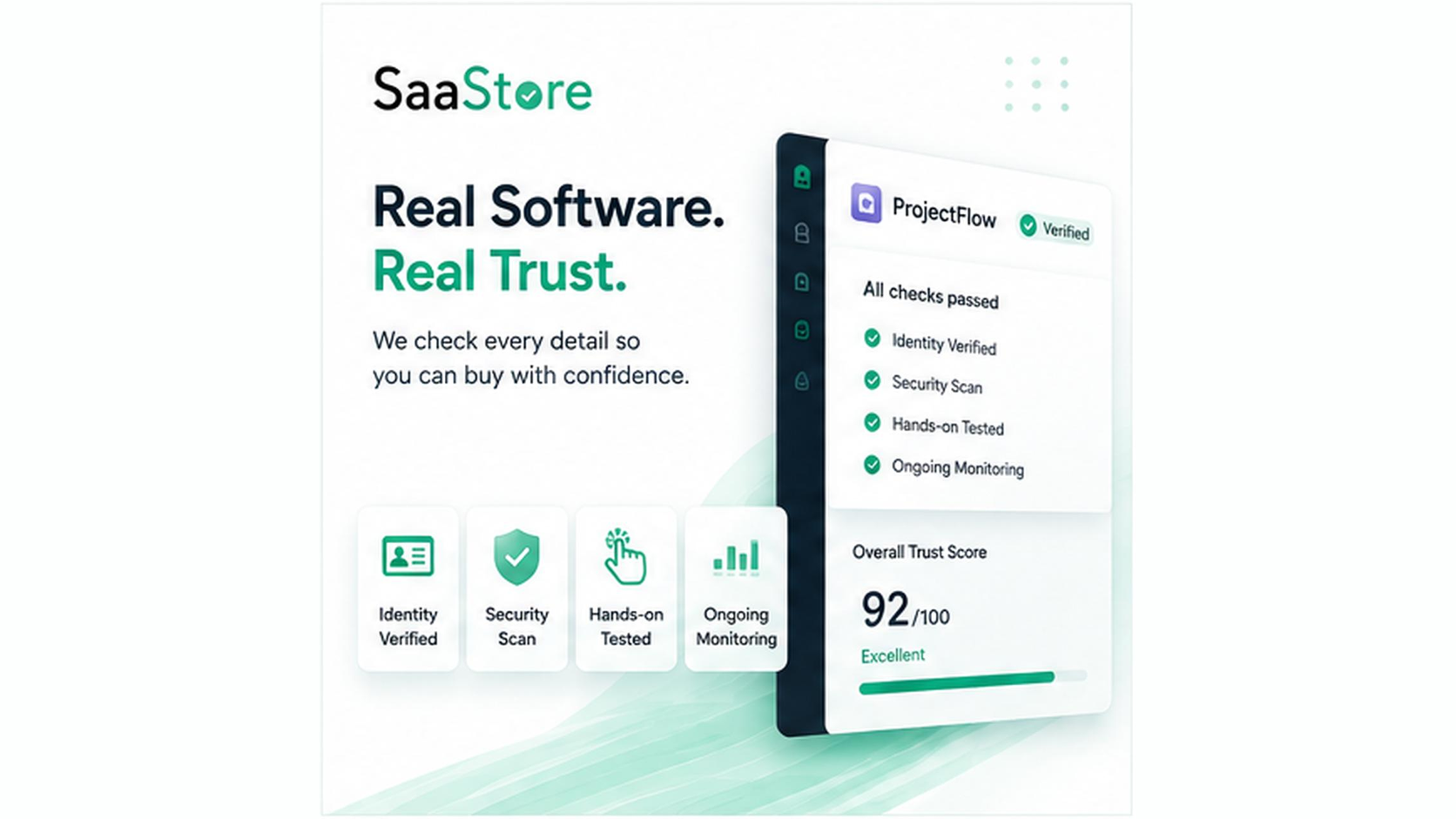
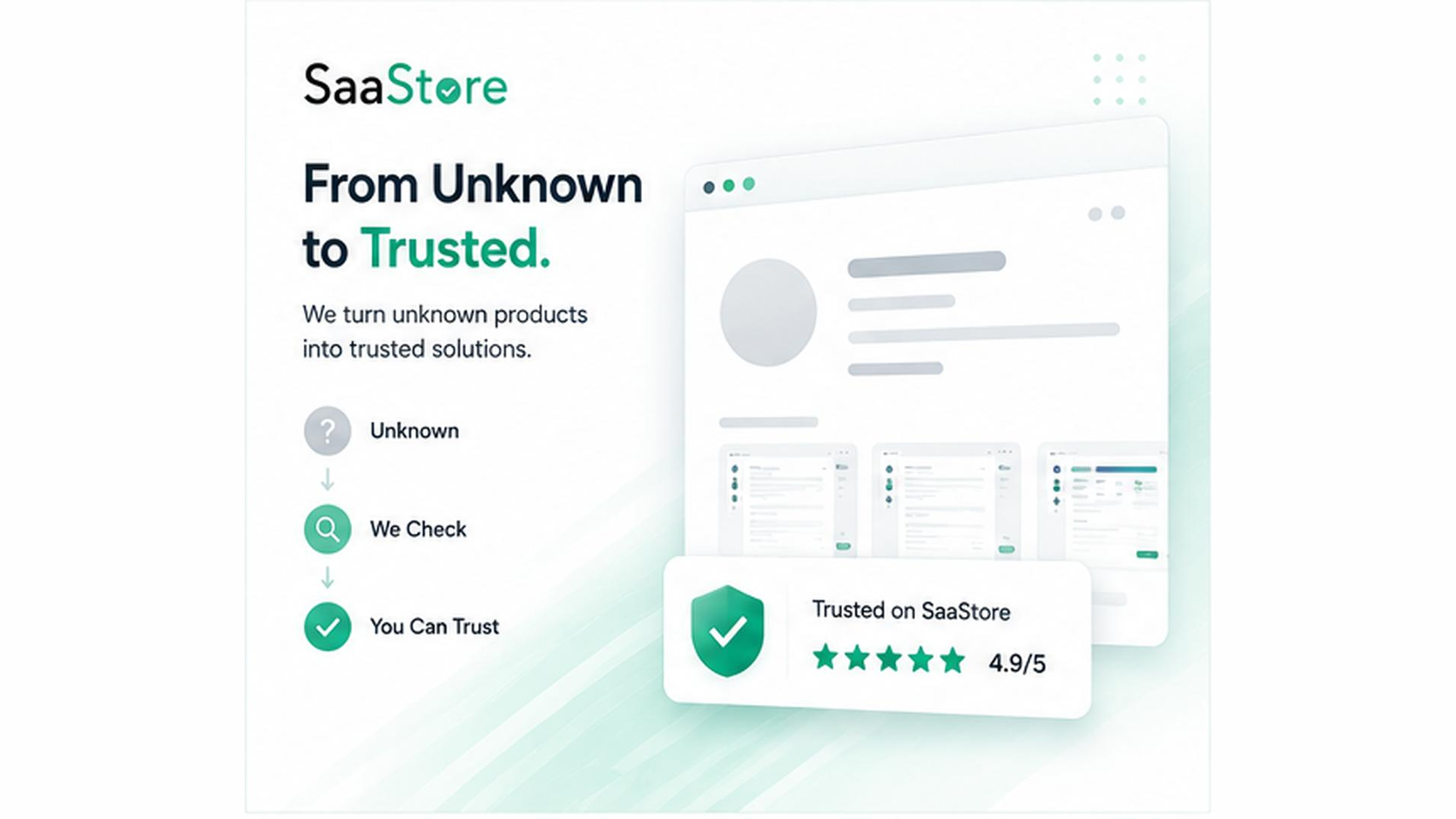
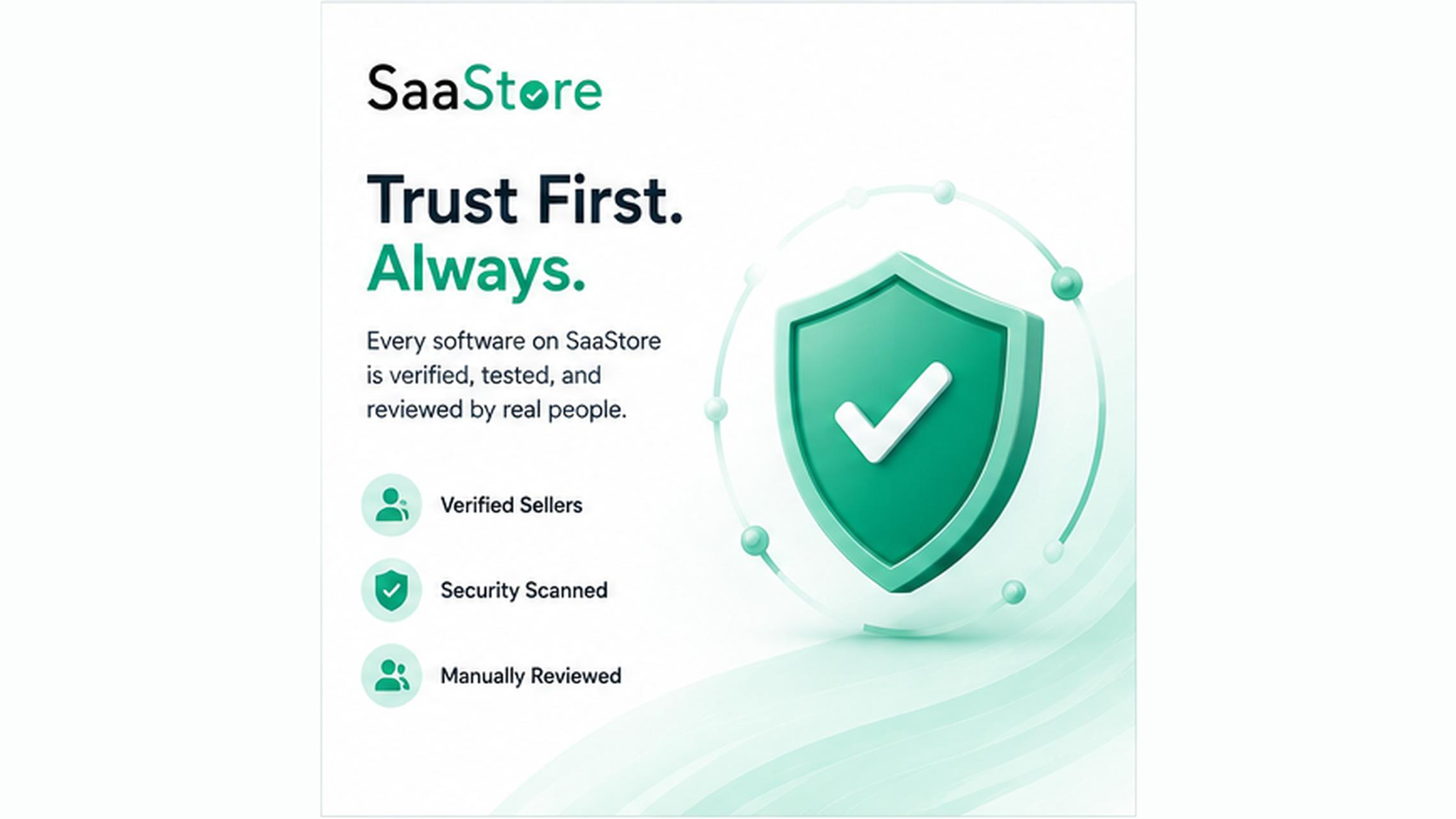
That is how we built SaaStore. Every listing is reviewed end-to-end before it's published, and approved apps can earn up to five trust signals on their page: an independent security scan, a UI/UX audit, a persona-fit audit, a phone-verified seller, and a hands-on manual review. Each one means we did some of the homework, and we still tell every buyer to try the product before they commit.
On payment we try to stay out of your way. You can subscribe and pay right on an app's SaaStore page, and some makers send you to their own site to check out instead. Either way the charge runs through a mainstream processor, so it stays disputable. We don't take a commission on what you buy, so nothing on this site is steering you toward a more expensive tool. We do sell optional promotion packages to makers, and anything promoted is labelled as promoted.